Discover what AI can(not) do
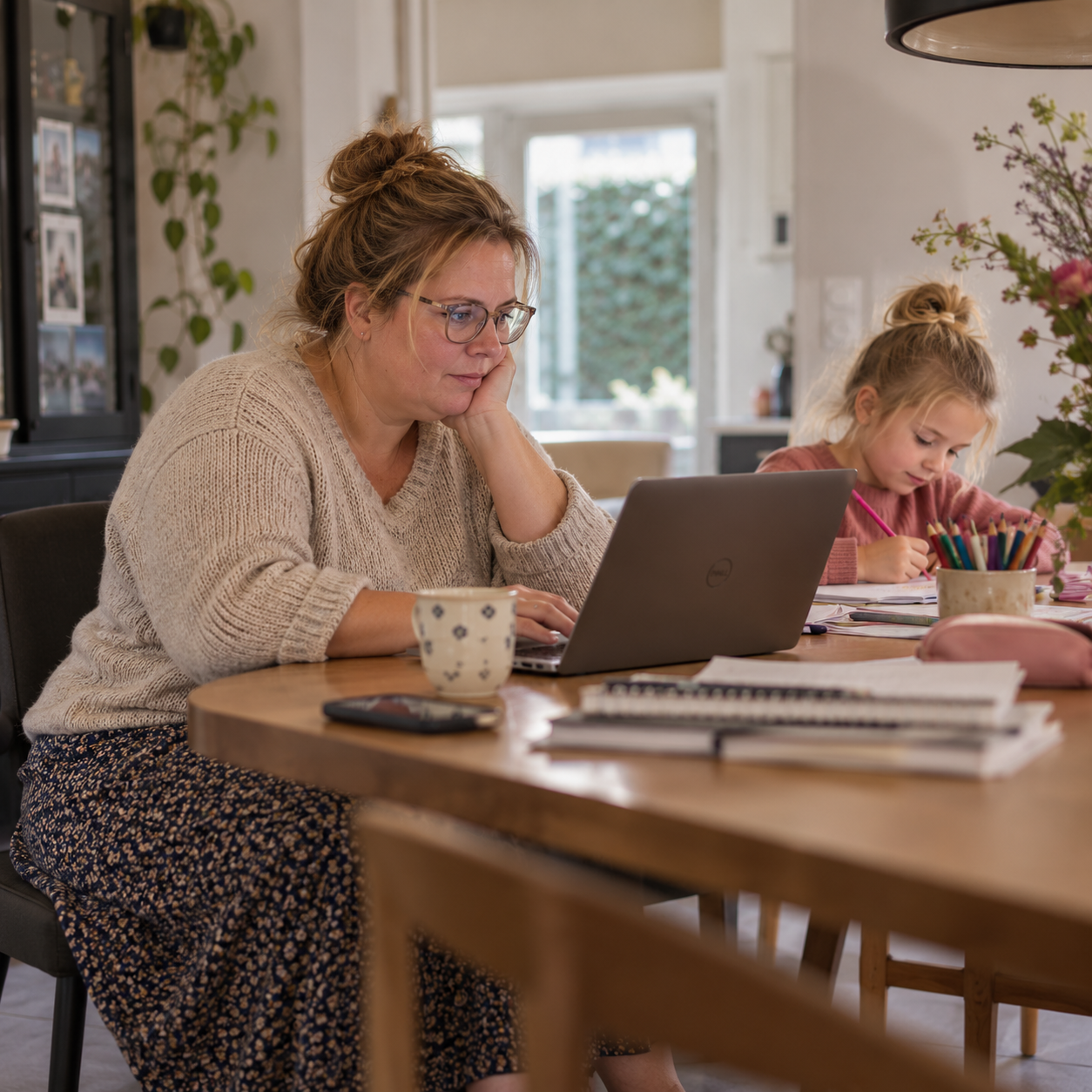
Thomas (15) writes monthly about AI at school. This time: how do you keep up as a parent or teacher? By experimenting yourself, seeking AI's limits and discovering what is not yet possible today, says Thomas.
Read more →Short articles about AI, parenting and faith, adapted from the Instagram account @slim.of.wijs.
Thomas (15) writes monthly about AI at school. This time: how do you keep up as a parent or teacher? By experimenting yourself, seeking AI's limits and discovering what is not yet possible today, says Thomas.
Read more →
At the end of each month I look back: what happened that educators should know about? A concise selection of AI news relevant to family, school and church. This time: September 2026.
Read more →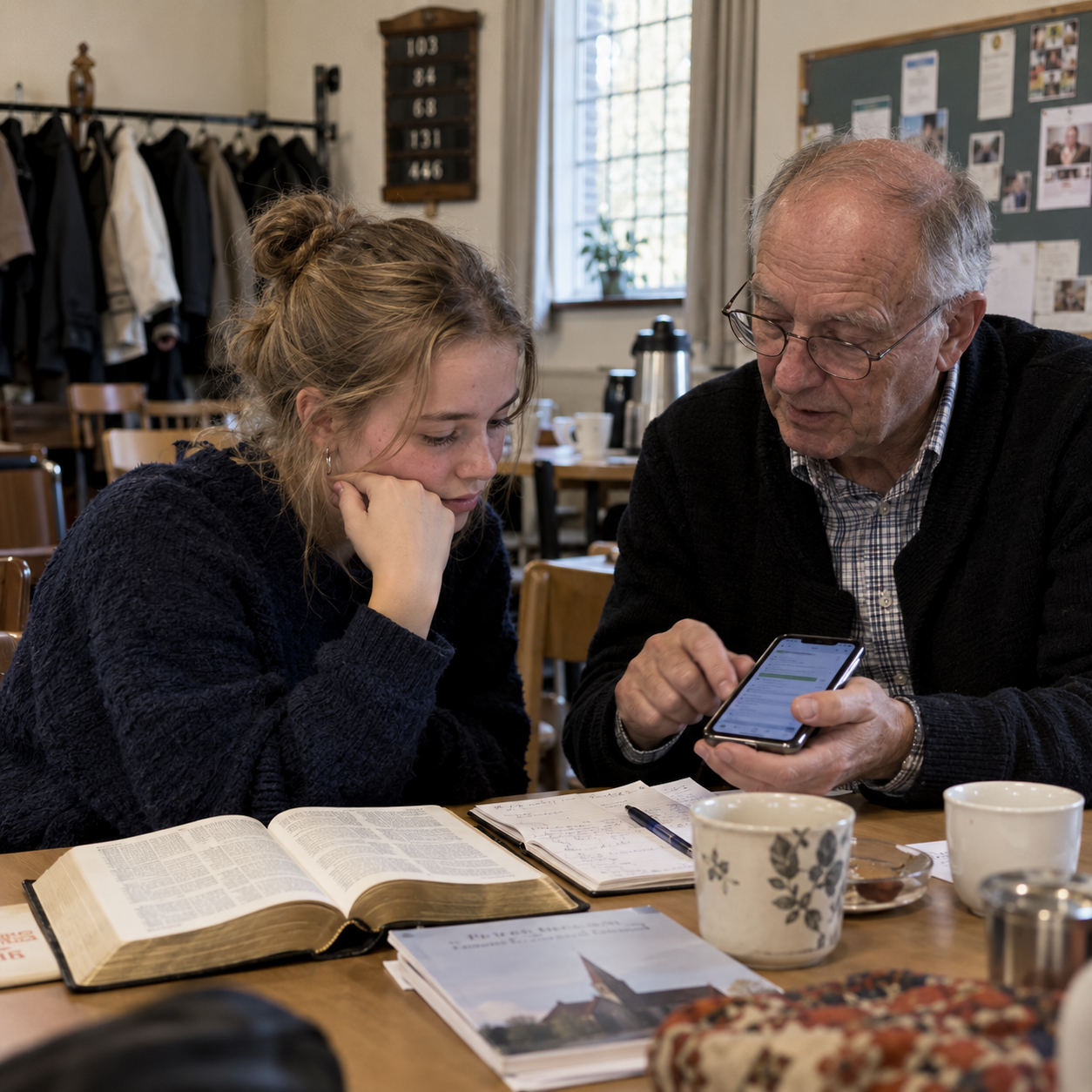
AI is also touching the church and calls for a considered stance. Using three roles — guide, protect and utilise — you can think through the opportunities and risks for each aspect of church life.
Read more →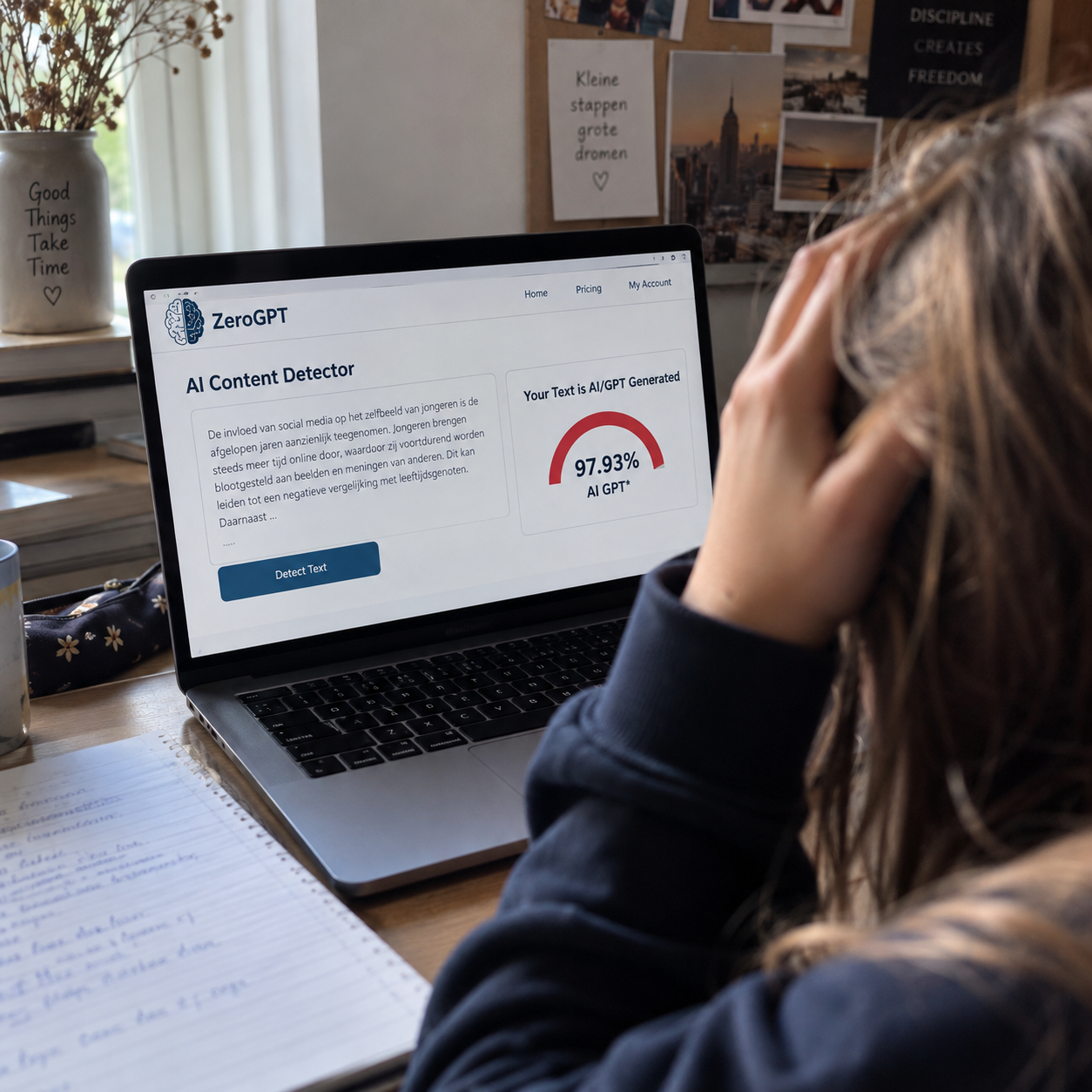
Thomas (15) writes monthly about AI at school. This time he explains why AI detectors wrongly flag some pupils and should therefore never be used as evidence.
Read more →
Schools are actively searching for a good way to deal with AI. The cloverleaf model by Remco Pijpers helps to examine four sides: education about AI, disrupted by AI, with AI and shaped by AI. But what do those four sides mean specifically for Christian education? And which questions also matter for parents?
Read more →
At the end of each month I look back: what happened that educators should know about? A concise selection of AI news relevant to family, school and church. This time: August 2026.
Read more →
Six questions to think carefully about AI's place in your family: from age and account choices to memory, data training and basic agreements.
Read more →
Thomas (15) writes monthly about AI at school. This time he explains why banning doesn't work, what goes wrong in practice with AI detectors, and how AI can actually help when pupils learn to use it consciously.
Read more →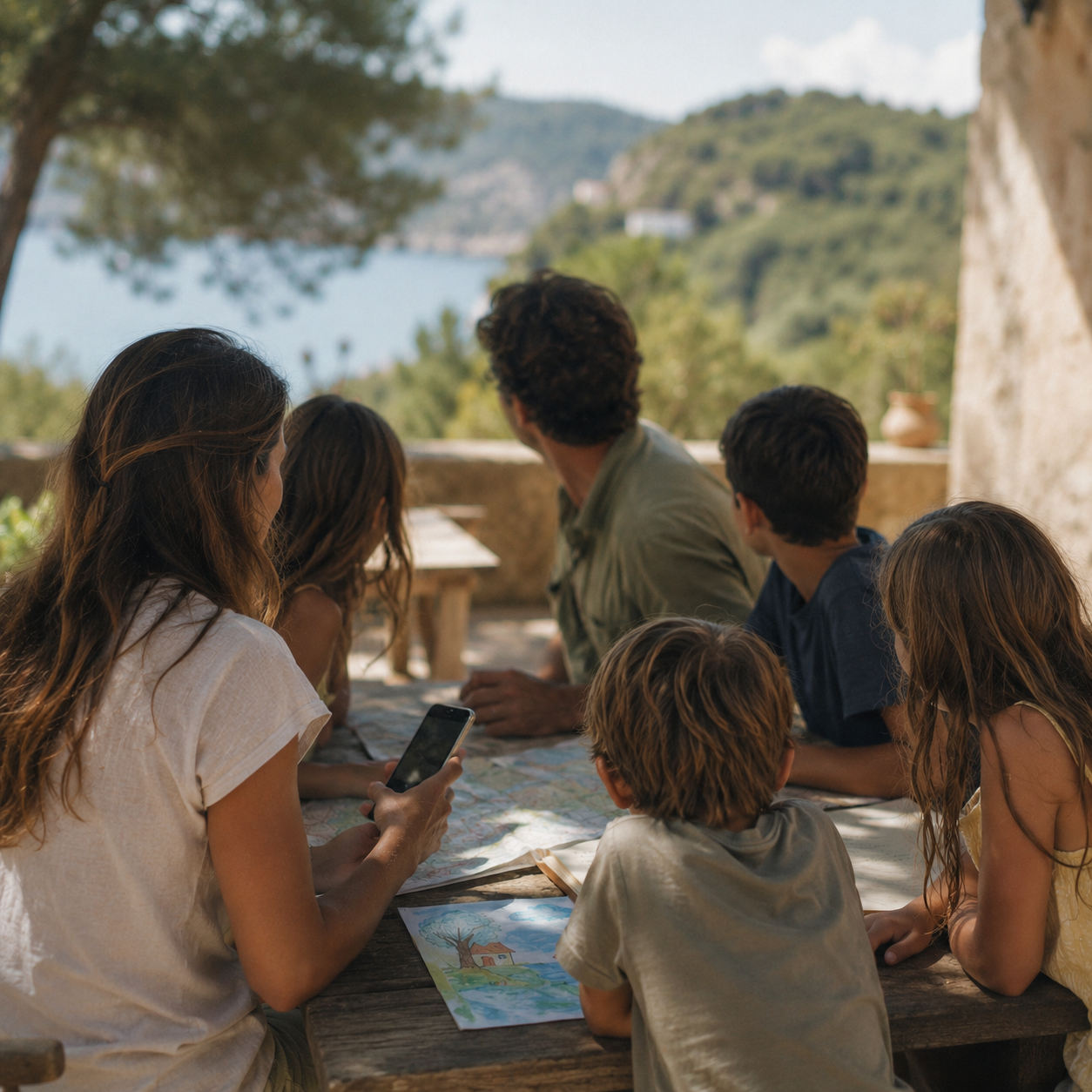
Although it's not really necessary and probably contributes little educationally, here's a small holiday post. Because: what can you do with the holidays and AI?
Read more →
When is it better not to use AI? When that piece of 'you' — your attention, for example — is the gift in a text, write it yourself.
Read more →
At the end of each month I look back: what happened that educators should know about? A concise selection of AI news relevant to family, school and church. This time: June 2026.
Read more →After our AI research, we got a great question in an interview: if so many young people use AI, do we see that reflected in exam results? I dove into the numbers.
Read more →At the end of each month I look back: what happened that educators, in my view, should know? A brief selection of AI news that touches on family, school and church. Now then, May 2026.
Read more →Almost 80% of children in upper primary school use AI, and almost 40% trust the outcome blindly. How can you guide them in this, at home and at school?
Read more →Research among more than 1,300 Christian children and young people shows how much AI is already simply part of their lives, and how little guidance is still given for it.
Read more →An AI-built app that makes AI texts sound 'less like AI'. Useful for learning to recognise AI-generated material, but not something to share with your child.
Read more →At the end of each month I look back: what happened that educators, in my view, should know? A brief selection of AI news that touches on family, school and development. Now then, April 2026.
Read more →Three quarters of parents have no idea about the AI policy at school, while around 90% of secondary school pupils use AI for schoolwork. Time to discuss it.
Read more →How do you bring the call to self-examination around Holy Communion closer to children aged 8 to 13? I used AI to turn it into small family moments over six days.
Read more →At the end of each month I look back: what happened that educators, in my view, should know? A brief selection of AI news that touches on family, school and development. Now then, February 2026.
Read more →Five free or low-threshold AI tools that can help when your child is hindered in learning by a disability or learning disorder.
Read more →What can you do to be or stay involved in your child's AI use? Six ready-to-use ideas, from a shared family account to the conversation about what ChatGPT actually is.
Read more →At the end of each month I look back: what happened that educators, in my view, should know? A brief selection of AI news that touches on family, school and development. Now then, January 2026.
Read more →Most parents these days are on board about social media: not too young, not too much. But with generative AI, the appetite for reflection is much smaller. A thought experiment.
Read more →A tip for exam year: aivoorleerlingen.nl, with AI teachers you can use to practise exams, ask for explanations or test yourself.
Read more →Following an RD article about RefGPT: praiseworthy that there is action, but a few caveats about claims regarding hallucinations, reformed accountability and the comparison with ChatGPT.
Read more →Many parents shield their children's faces on social media with an emoji. But two posts showed that even that extra care is no longer sufficient in this day and age.
Read more →Is AI formation for Christian parents and teachers fundamentally different from that of non-Christian educators? The difference lies mainly in the reference point: the Bible as a lens.
Read more →At the end of each month I look back: what happened that educators, in my view, should know? A brief selection of AI news that touches on family, school and development. Now then, December 2025.
Read more →A question about a black sling worn by a church elder produced a very solemn but entirely made-up answer. A nice example of hallucinating, word of the year.
Read more →A photo of the material, and one push of a button gives a complete podcast, multiple-choice test, flashcards or mind map. Google's NotebookLM is a tip for auditory learners and pupils with dyslexia.
Read more →At the end of each month I look back: what happened that educators, in my view, should know? A brief selection of AI news that touches on family, school and development. Now then, November 2025.
Read more →AI doesn't just change our practical reality, it really calls for reflection. What does it mean for our arguments about music and film when there's no longer a maker, but a calculation model?
Read more →Studies and experts already give some indications about AI and brain development, but firm conclusions can only be drawn once real long-term research is done.
Read more →With one photo of a word list, make flashcards and practice games within a minute, which you can even share with friends or classmates to play against each other.
Read more →That's the question I just asked my children. Quite a daring one, given how many critical voices there are. Yet it doesn't feel far-fetched to me: four reasons why.
Read more →At the end of each month I look back: what happened that Christian educators should know? A brief selection of AI news that touches on family, school and faith.
Read more →
"The whole world is going to pieces because of AI; what can I do about it? My role seems so small." Three responses to that outer circle, and why I choose the third.
Read more →"A talk about AI? Are you positive or negative then?" My answer: moderately positive. Three circles that help to think about AI.
Read more →How left or right is AI? I had four large AI systems fill in the voting guide: ChatGPT, Claude, Gemini and Grok. The outcome was fairly left-wing.
Read more →Can ChatGPT write a sermon? An elder said: "You can still tell it is from AI." I put it to the test.
Read more →A regional evening about AI started with Revelation 13. I was startled. Yet caution is warranted with that conclusion, it depends on the "spirit" in which AI is used.
Read more →Does everything you enter go straight to America, or worse: to China? The answer is not black and white. And what about Sora 2?
Read more →Is there anything to say about the Bible and AI? We take it a bit broader: how does the Bible view technology? From Bezalel to Babel.
Read more →Many children and young people ask AI personal questions. Is that bad? AI is fed mainly with secular sources, it is not a neutral technology.
Read more →How do you teach your child to use AI wisely? Here is a handle: "Prompt like a P.R.O." - Fitting, Control and Okay.
Read more →"Prompting": what is it actually? A prompt is simply the question or instruction you give to AI. The better your prompt, the better the answer.
Read more →"My daughter uses ChatGPT for her project. Should I forbid that?" It depends. The difference between copying and learning.
Read more →"In my view AI does not yet have a place in our family. How can I be sure of that?" AI is probably already everywhere, including in your home.
Read more →"AI" and "ChatGPT" are often used interchangeably. But ChatGPT is actually a specific form of AI: generative AI.
Read more →Everyone is talking about AI, but what is it exactly? AI stands for Artificial Intelligence.
Read more →